As the first weeks of a new academic year unfold, Early Years teams begin to see how children and families are responding to transition. For some children, this may be their first experience of spending significant time away from the people and places they know best. Even when the initial handovers have passed, settling can remain a challenging process for the whole family.
Most settings establish routines intended to provide support, consistency and predictability during this period. These might include:
introductory or settling-in visits
a gradual increase in the length and frequency of sessions
a predictable handover and collection routine, including a clear goodbye
supportive communication with families during the child’s first days and weeks
These approaches can be extremely helpful. They give children, families and practitioners some structure during a period of considerable change.
The difficulty begins when a useful routine becomes the only routine, regardless of what an individual child is communicating.
Predictability matters - but it is not enough
Consistency and uniformity are not the same thing. Consistency means that children experience dependable principles, relationships and responses. Uniformity means applying the same strategies to every child, even when their needs and responses differ.
Familiar sequences can help children anticipate what will happen. Reliable adults and honest goodbyes can build trust. However, repeating a routine does not automatically make a child feel safe; an approach that reassures one child may overwhelm another.
A settling-in process should therefore provide a secure framework rather than a fixed script. Practitioners need enough flexibility to notice how each child is responding and adapt the support within that framework.
Settling begins before the first day
Opportunities to visit and explore the environment before the official start date can make the unfamiliar feel more manageable. Children can begin to recognise the room, meet the adults who will care for them and see some of the other children with whom they will spend their time.
This period also gives practitioners an important opportunity to learn. Meaningful conversations with families can help the setting understand the child’s routines, interests, previous experiences, comfort objects and familiar ways of being soothed. Practitioners can find out what the child already manages independently and where support may be needed from the outset.
Communication deserves particular attention. If a child uses a different home language from the language used in the setting, staff need to know the words, gestures and expressions through which that child communicates essential needs, preferences and distress. This is not an optional extra; it is central to the child’s wellbeing, safety and sense of being understood.
It is the setting’s responsibility to gather and use this information. The child and family should not be expected simply to adapt themselves to a predetermined nursery routine.
Settling is a relational process
Children settle through trusted relationships, not procedures alone. A reliable key adult can become a source of security during a period of change, while a familiar object can provide continuity between home and the setting.
Practitioners also need the time and capacity to notice what children are communicating. One child may express distress loudly; another may become silent or withdrawn. Some children may follow routines without beginning to play, communicate or seek help from an adult.
The absence of tears is not, by itself, evidence that a child is settled. Genuine settling is reflected in growing trust, confidence, engagement, communication and connection.
Rethinking separation and goodbye
One of the most difficult parts of the process can be supporting families through separation. Parents and carers may be experiencing worry, sadness or uncertainty of their own. They should be supported through this transition, not blamed for making it more difficult because they are emotional.
It can be tempting for a parent or carer to leave while the child is distracted. However, a calm and honest goodbye gives the child a predictable message: the adult is leaving and will return. Disappearing without saying goodbye may avoid distress in that moment, but it can create confusion when the child realises that the adult has gone.
A clear and relatively brief goodbye is often helpful, but even this should not become an inflexible rule. The pace of separation will differ. Some children may benefit from additional visits, shorter sessions, more time with a familiar adult or a revised handover approach. Practitioners need to observe the child’s response rather than apply one technique automatically.
Partnership with families
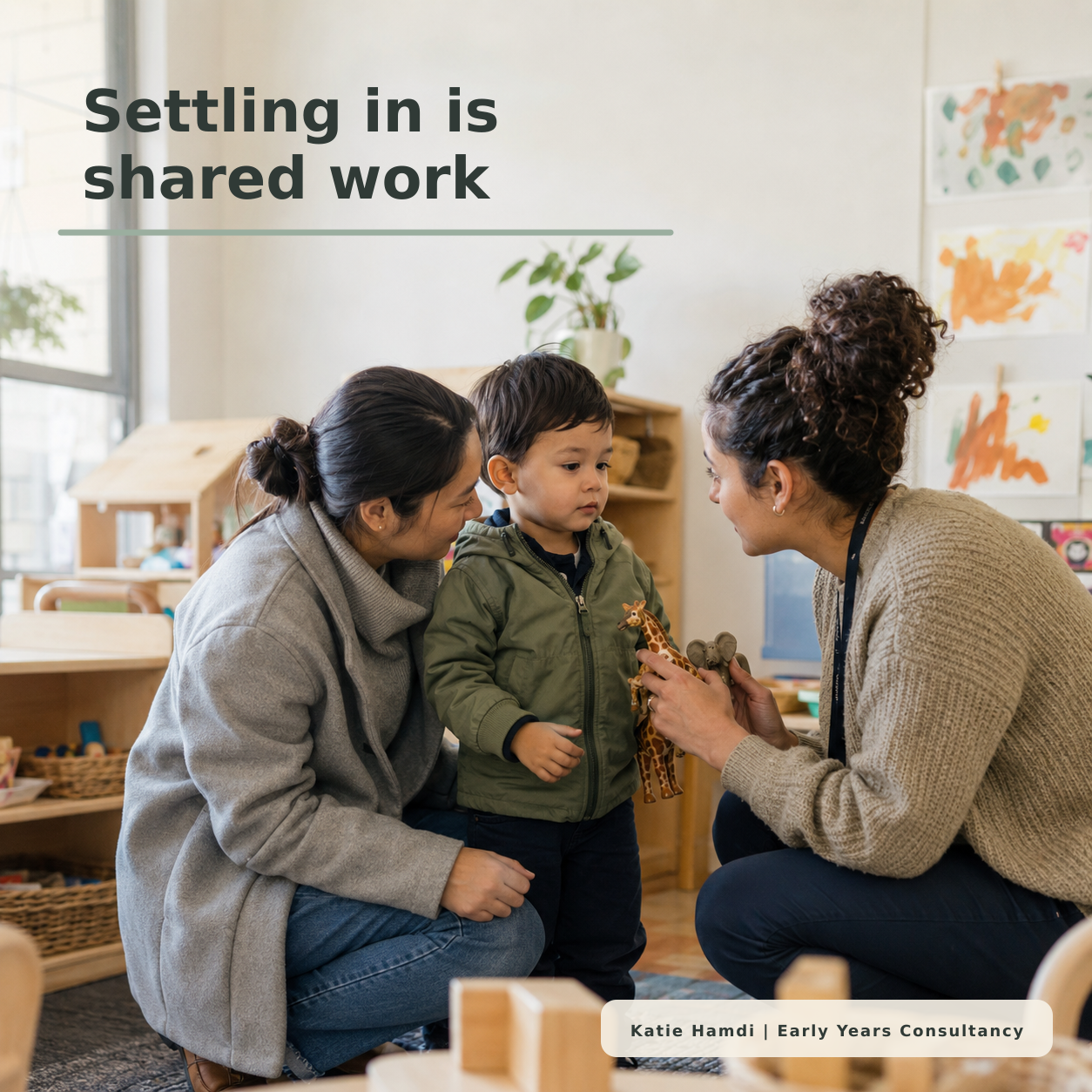
Transition is shared work between educators and families. Settings need clear procedures, but families should experience more than a list of instructions. Practitioners should invite their knowledge, listen carefully and explain the reasoning behind the setting’s approach.
It is useful to agree how communication will happen during the early days and what information will be shared. Cultural expectations, home language and previous experiences should form part of these conversations. When the plan is not working, it should be reviewed with the family rather than followed simply because it is the usual procedure.
Family confidence often grows when parents and carers can see that practitioners genuinely know, understand and respond to their child.
What should be consistent - and what can remain flexible?
Responsive practice does not mean the absence of clear expectations. Some principles should remain consistent across the setting.
Consistent principles might include:
every child has a known adult responsible for supporting the transition
families are invited to share meaningful information
children are told honestly when their parent or carer is leaving
home language and communication needs are respected
distress is noticed and responded to sensitively
progress is communicated honestly
safeguarding and collection procedures remain clear
Flexible elements might include:
the number of introductory visits
the length and pace of initial sessions
how long a parent, carer or familiar adult remains
the comfort objects used
the form and frequency of family updates
how practitioners begin to build the relationship
when and how the settling plan is reviewed or adjusted
Looking beyond whether the routine was completed
Imagine two children entering the same setting and completing the same introductory visits. One quickly begins to explore but becomes distressed towards the end of each session and struggles at collection time. The other appears quiet and follows the routines, yet is not communicating, playing or seeking support from adults.
Neither child’s experience can be understood simply by recording whether they followed the settling routine or stopped crying at handover. The first may need additional support to understand the sequence of the day and manage its ending. The second may need focused help to build a relationship, communicate needs and feel confident enough to participate.
This is why leaders need to evaluate the quality and impact of transition practice, not merely whether the agreed procedure was completed.
Leadership reflection
Leaders and teams might consider:
Does our process help us understand each child, or does it primarily organise admissions?
Which aspects of transition are genuinely non-negotiable, and why?
Where can practitioners exercise informed professional judgement?
How do we know that a child feels secure rather than simply appearing settled because they follow the routine?
What happens when the standard settling plan is not working?
Do staffing arrangements give practitioners enough capacity to build relationships properly?
How effectively are families involved in reviewing the transition?
Creating trust and belonging
A settling routine can provide predictability, but it is relationships, individual knowledge and responsive practice that help children develop trust and belonging.
The aim should not be to move every child through the same process. It should be to give every child the support they need to feel safe, understood and ready to belong.
